
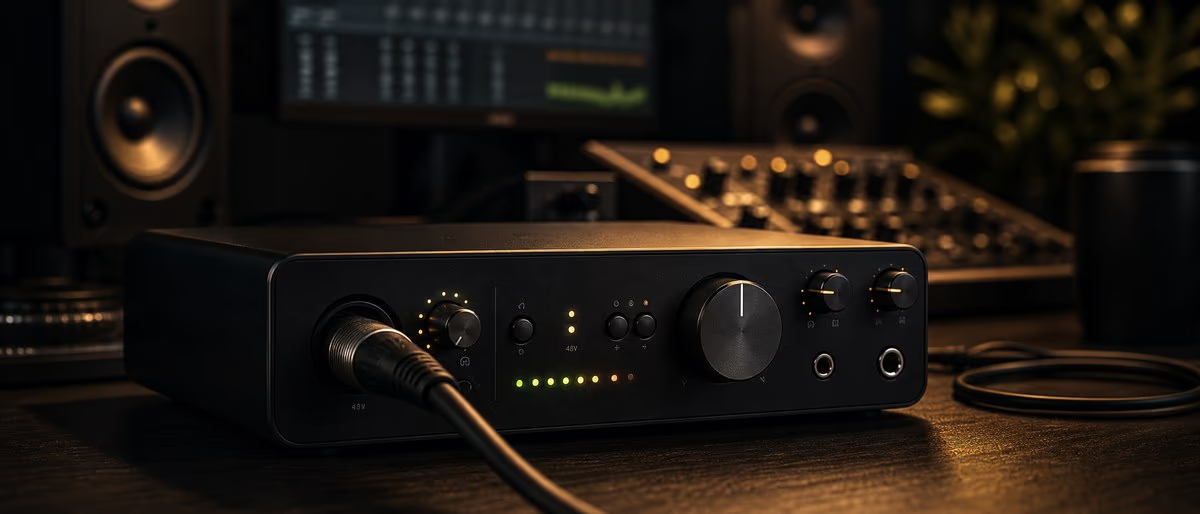
What Does an Audio Interface Do?
An audio interface converts microphone and instrument signals into digital data your computer can process, then converts digital audio back to analog for monitoring.
Best Budget Interface ($100-200): Focusrite Scarlett 2i2 Gen 4 vs Universal Audio Volt 2
The $150-200 range delivers professional-grade conversion and preamps previously found only in studio racks.
Best Mid-Range Interface ($200-400): Audient EVO 8, MOTU M2
Mid-range interfaces add more I/O, better converters, and features designed for collaborative workflows.
Best Professional Interface ($400+): Universal Audio Apollo Twin X, RME Babyface Pro FS
Professional interfaces justify their premium through superior converter quality, built-in DSP, and rock-solid Thunderbolt drivers.
USB vs Thunderbolt: Which Connection Type Is Right for You?
USB covers 95% of home studio use cases; Thunderbolt is essential only for high channel counts or professional tracking sessions.
How Many Inputs Do You Really Need?
Most producers need only 2 inputs; the exceptions are recording drums, live bands, or multiple musicians simultaneously.
How to Choose the Right Audio Interface — Step-by-Step
- 1 Determine your input needs
- 2 Set a budget
- 3 Choose connection type
- 4 Check preamp quality
- 5 Test driver stability
Learning path
Related answer hubs
Looking for studio-ready cables and accessories too?
Browse Free DownloadsFrequently Asked Questions About Audio Interfaces for Home Studios
- What audio interface do most home studio producers use?
- The Focusrite Scarlett 2i2 is the world's best-selling audio interface and the de facto standard for home studios. Its combination of reliable drivers, clean preamps, and an affordable price point makes it the top choice for beginners and experienced producers alike. The 4th generation model adds Auto Gain and Clip Safe features previously found only on higher-end units.
- Do I need an audio interface for home studio recording?
- Yes — if you want to record microphones, electric guitars, or keyboards with low latency and high quality, you need an audio interface. Built-in computer sound cards introduce audible noise, add 10-20ms of latency, and lack the phantom power required for condenser microphones. A $150 interface solves all three problems.
- What is a good audio interface for a small home studio?
- The Focusrite Scarlett 2i2 Gen 4 or Audient EVO 8 are the best choices for a small home studio with 1-2 microphones. Both offer 2 pristine preamps, USB-C connectivity, and rock-solid drivers for Windows and macOS. The Scarlett's Air mode adds a high-frequency boost reminiscent of ISA preamps.
- Is USB audio interface good enough for professional recording?
- Modern USB audio interfaces at the $150+ price point deliver 24-bit/96kHz quality that exceeds the hearing threshold of human ears. USB-C interfaces like the MOTU M2 and Audient EVO 8 offer professional-grade converters used in commercial studios. For most music production, a well-priced USB interface is indistinguishable from a Thunderbolt unit.
- How many inputs does a home studio really need?
- Most home studio producers need only 2 inputs — one for microphone, one for instrument or line source. A 2-in/2-out interface covers 95% of solo recording scenarios. If you record live drums (4+ mics) or multiple musicians simultaneously, consider a 4-in/4-out or 8-in/8-out interface like the Audient EVO 8.