
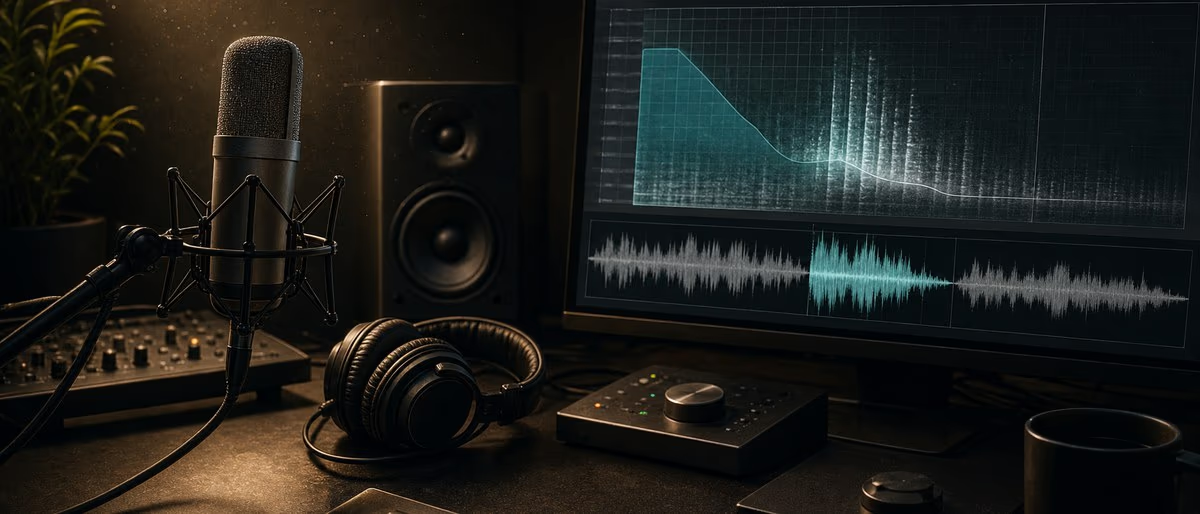
Quick Answer: Use Noise Reduction Gently
The best noise reduction is light, staged and checked against the original. Remove hum, clicks and steady hiss before heavy compression. If the vocal starts to sound watery, metallic or lisped, back off and fix only the noisy phrases.
Processing Order
Edit first: cut silence, fade breaths, and remove obvious clicks manually. Then notch 50/60 Hz hum and harmonics.
Apply broadband denoise last and only on phrases that need it — not across the entire take if the verse is mostly clean.
Judge in the Mix
Noise that disappears under drums may not need surgical removal. Soloing vocals at extreme denoise settings creates artifacts that compression exaggerates.
Compare A/B with the raw take every few dB of reduction.
When Restoration Cannot Fix the Source
Mic placement, gain staging, and room treatment still beat any plugin. See how to record vocals at home before relying on denoise.
Dynamic mics in untreated rooms often need less restoration than condensers.
Free Restoration Tools
Plugg Supply catalogs free and freemium restoration utilities alongside mixing plugins — verified downloads via Telegram, not random mirror ZIPs.
Noise Reduction Tool Comparison
| Tool | Best for | Caution |
|---|---|---|
| Audacity Noise Reduction | Free basic hiss removal | Can sound phasey when pushed hard |
| iZotope RX Elements | Affordable cleanup | Use modules separately instead of one heavy pass |
| Bertom Denoiser | Simple real-time denoise | Great for dialogue-style noise, less for complex music |
| Acon Digital Restoration | Clicks and hum | Check musical transients after processing |
| DAW strip silence | Editing before denoise | Always do this first — it is free CPU |
Safe Restoration Steps
- Edit first: Cut silence, fades and obvious clicks before denoise.
- Remove hum: Use notch filtering for 50/60 Hz hum and harmonics.
- Denoise lightly: Use the smallest reduction that solves the problem in the mix.
- Compress after: Apply vocal compression only after cleanup sounds natural.
Learning path
Related answer hubs
Fix the recording chain first, then use the lightest denoise pass that works in the full mix — not in solo at maximum reduction.
Browse Free DownloadsFrequently Asked Questions
- Should I denoise before mixing vocals?
- Yes, but lightly. Heavy denoise before compression can create artifacts that become louder later.
- Can noise reduction fix a bad recording?
- It can improve a recording, but it cannot fully replace proper mic placement, gain staging and room treatment.
- Why does denoise make vocals sound underwater?
- Too much reduction removes consonants and breath noise that the ear expects. Lower the amount or use spectral tools on noisy sections only.
- Free vs paid restoration?
- Free tools handle hiss and hum on demos. Paid RX-style tools win on complex mouth clicks and intermittent noise.
- Should I denoise the beat too?
- Usually no — fix vocal lanes first. Broadband denoise on full mixes dulls transients.
- Best plugin for home rap vocals?
- Light Bertom Denoiser or RX Elements modules after editing — then EQ and de-ess as usual.