
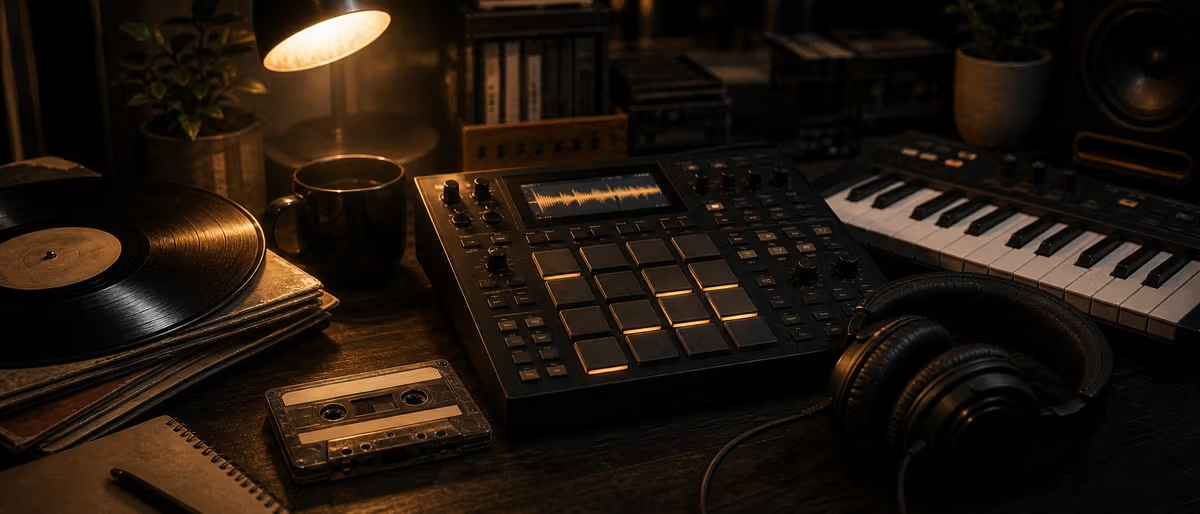
What is a Lo-Fi Sample Pack?
A lo-fi sample pack contains drum breaks, jazz chord loops, piano phrases, vinyl textures, and ambient pads processed to sound degraded — bitcrushed, saturated, pitch-wobbled, or run through tape emulation. These packs are the primary source material for lo-fi hip-hop, chill beats, and study music running at 70–90 BPM, a tradition descending from Nujabes, J Dilla, and the SP-404 workflow.
What Makes a Lo-Fi Sample?
Lo-fi sound design is deliberate imperfection. Each element reduces fidelity in a specific, controllable way to create warmth, intimacy, and nostalgia.
- Vinyl Crackle — Static, pops, and surface noise sampled from real vinyl or generated by iZotope Vinyl (free). Applied as a separate audio layer at -12 to -18 dB, it textures the mix without masking transients.
- Tape Hiss & Saturation — Subtle harmonic distortion and high-frequency noise from tape emulation — RC-20 Retro Color, Goodhertz Lossy, or the free Chow Tape Model. Drive the input until the transients round off softly.
- Bitcrushing — Reducing bit depth from 24 to 8–12 bits adds quantisation noise and a characteristic gritty texture. Most lo-fi producers apply light crushing (14–16 bits) rather than the extreme 8-bit computer aesthetic.
- Warm Saturation — Tube or transformer saturation from plugins like Softube Saturation Knob (free) or Klanghelm IVGI adds even harmonics, compresses peaks softly, and glues the mix without a hard compressor.
- Jazz Chord Voicings — Lo-fi melodies typically use maj7, min7, dim7, and 9th chord voicings borrowed from jazz. These open, harmonically rich chords are the single biggest contributor to the genre's emotional character.
- Pitch Wobble — Slow LFO modulation on pitch simulates warped vinyl or worn tape heads. RC-20 Retro Color's Wobble control and iZotope Vinyl's Warp parameter handle this precisely; aim for depth below 5 cents.
Types of Lo-Fi Samples
Drum Breaks
Chopped or intact acoustic drum phrases at 70–90 BPM. The backbone of every lo-fi beat. Often processed with SP-404-style compression and vinyl noise.
Jazz Chords
maj7, min7, dim7, and 9th voicings played on electric piano, guitar, or upright piano. Usually 2–4 bars, supplied in root key with BPM tag.
Piano Loops
Warm upright or electric piano phrases. The best packs include Fender Rhodes, Wurlitzer, and prepared-piano recordings with room reverb pre-applied.
Vinyl Textures
Pure crackle, dust pops, needle drops, and side-end runout loops. Layer these under beats at low volume to introduce a constant low-level noise floor.
Vocal Chops
Short, breathy vocal phrases, one-word chops, and hummed melodies. Processed dry for pitch-shifting and time-stretching in-session.
Ambient Pads
Slow-evolving drones, room recordings, city soundscapes, rain, and tape delay textures. These fill the stereo field and define the spatial mood of the track.
Lo-Fi Sample Pack Essentials
| Element | Format | BPM Range | Key Characteristics |
|---|---|---|---|
| Drum Breaks | 24-bit WAV, stereo | 70–90 BPM | Acoustic kit, room bleed, SP-404 compression, occasional vinyl noise baked in |
| Melodic Loops | 24-bit WAV, stereo | 70–90 BPM | Jazz chords (maj7, min7, 9th), piano or Rhodes, root key labelled |
| Bass Lines | 24-bit WAV, mono | 70–90 BPM | Upright bass, muffled electric bass, sub-heavy but never bright; rooted to chord key |
| Textures / Foley | 24-bit WAV, stereo | Tempo-free | Vinyl crackle, rain, cafe ambience, tape hiss — layered under full mix at -15 to -20 dBFS |
| Vocal Chops | 24-bit WAV, mono | Tempo-tagged | Short breaths, one-word phrases, pitched humming — supplied dry for in-session processing |
How to Make a Lo-Fi Beat in 15 Minutes
The Tomppabeats and Idealism aesthetic breaks into a repeatable workflow. Every element has a role; nothing is decorative.
- Choose your drums. Load a 2-bar break at 75–85 BPM. Chop the snare hit slightly behind the grid (10–20 ms late) for the J Dilla-style pocket feel. Apply subtle tape saturation to the drum bus.
- Layer a jazz chord sample. Find a maj7 or min7 chord loop matching your drum BPM. Pitch-shift to root key. Apply a low-pass filter (cutoff around 8–10 kHz) and a short room reverb (pre-delay 15 ms, decay 0.8 s).
- Add bass. Use a bass loop from the pack or program an upright-bass one-shot via a sampler. Keep it monophonic, root notes only. High-cut at 200 Hz on the main mix bus to prevent muddiness.
- Layer vinyl crackle. Import a vinyl texture loop on a separate track at around -15 dBFS. Use iZotope Vinyl (free) or RC-20 Retro Color on the master to unify the noise floor across all elements.
- Sidechain the pad. If using an ambient pad, sidechain it gently to the kick drum (1 ms attack, 80 ms release, 3:1 ratio). This creates a subtle breathing motion that mirrors the groove without obvious pumping.
- Mix down. Apply Chow Tape Model (free) or RC-20 on the master. Drive input until soft saturation glues peaks. High-pass at 30 Hz. Final target: -14 LUFS integrated for streaming, -9 LUFS for YouTube lo-fi playlists.
Lo-Fi Processing Chain
Each processing stage serves a specific degradation purpose. Stack them in order — distortion before time-based effects, vinyl noise last.
Vinyl Emulation
iZotope Vinyl (free) or RC-20 Retro Color. Controls: Warp (pitch drift), Mechanical (bearing noise), Dust (crackle density), Electrical (hum). Start with all parameters under 20%.
Bitcrushing
Decimort 2 or the free Krush by Tritik. Set bit depth to 14–16 for subtle texture. Avoid going below 12 bits unless intentional — extreme bitcrushing overwhelms jazz harmonic content.
Tape Saturation
Chow Tape Model (free, open source) models a Sony TC-260 reel-to-reel. Drive the input stage to add harmonic richness and soft transient rounding without hard clipping.
Low-Pass Filter
Cut frequencies above 12–15 kHz on melodic elements. This removes digital sheen and forces the mix into an older, bandwidth-limited acoustic. Use a resonant filter at 12 dB/oct for character.
Chorus / Wobble
A slow chorus or subtle pitch modulator (rate ~0.2 Hz, depth ~5–8 cents) adds warped-record instability. RC-20's Wobble mode applies this across the full signal chain in one pass.
RC-20 Alternatives
Free substitutes: iZotope Vinyl (crackle + warp), Chow Tape Model (tape saturation), Kilohearts Bitcrush (free Snapin host), Aberrant DSP Digitalis (bit reduction + jitter). Stack these on a send or master bus.
Download royalty-free lo-fi sample packs — vinyl drum breaks, jazz chord loops, piano phrases and ambient textures — on Plugg Supply.
Browse Free DownloadsFrequently Asked Questions
- What BPM is lo-fi hip-hop?
- Lo-fi hip-hop typically runs at 70–90 BPM. The sweet spot is 75–85 BPM — slow enough to feel relaxed but fast enough to maintain groove. Tracks above 90 BPM start crossing into boom bap or house territory. Most lo-fi sample packs are tagged at 80 BPM by default.
- Can I use lo-fi sample packs on commercial releases?
- Royalty-free lo-fi packs from Plugg Supply are cleared for commercial use — streaming, YouTube monetisation, sync licensing, and beat sales. The raw audio files cannot be redistributed or repackaged. Always verify the specific pack licence before a sync deal, as some third-party distributors have additional restrictions.
- Do I need an SP-404 to make lo-fi beats?
- No. The SP-404 workflow — chopping samples on hardware, applying onboard effects, recording the output — is one approach, not a requirement. The same sound is achievable in FL Studio, Ableton Live, or Logic Pro using Chow Tape Model, iZotope Vinyl, and a bitcrusher. Hardware samplers add workflow character but not a sound that software cannot replicate.
- What jazz chords are used in lo-fi music?
- Major 7th (maj7), minor 7th (min7), diminished 7th (dim7), dominant 9th, and minor 9th voicings are the standard palette. Half-diminished (m7b5) chords appear frequently in minor-key progressions. Common progressions: ii–V–I in major, i–bVII–bVI–V in minor. Voicings typically omit the root on the piano to leave space for the bass line.
- What is RC-20 Retro Color and are there free alternatives?
- RC-20 Retro Color by XLN Audio is a paid lo-fi processing suite combining vinyl noise, tape saturation, pitch wobble, bitcrushing, reverb, and a noise gate. Free alternatives: iZotope Vinyl (crackle + warp), Chow Tape Model (tape saturation), Krush by Tritik (bitcrusher), Valhalla Supermassive (reverb). Stack these four on a send or master bus to approximate RC-20 at zero cost.
- Why do my lo-fi beats sound muddy?
- Mud in lo-fi mixes comes from three sources: too many low-pass filters stacking bass energy below 200 Hz; vinyl crackle or ambient textures mixed too loud relative to the drums; or chorus/wobble effects applied to bass frequencies. Fix: high-pass everything except the kick and bass at 100–150 Hz, bring ambient layers down to -15 dBFS or below, and apply wobble only to mid-high content.