
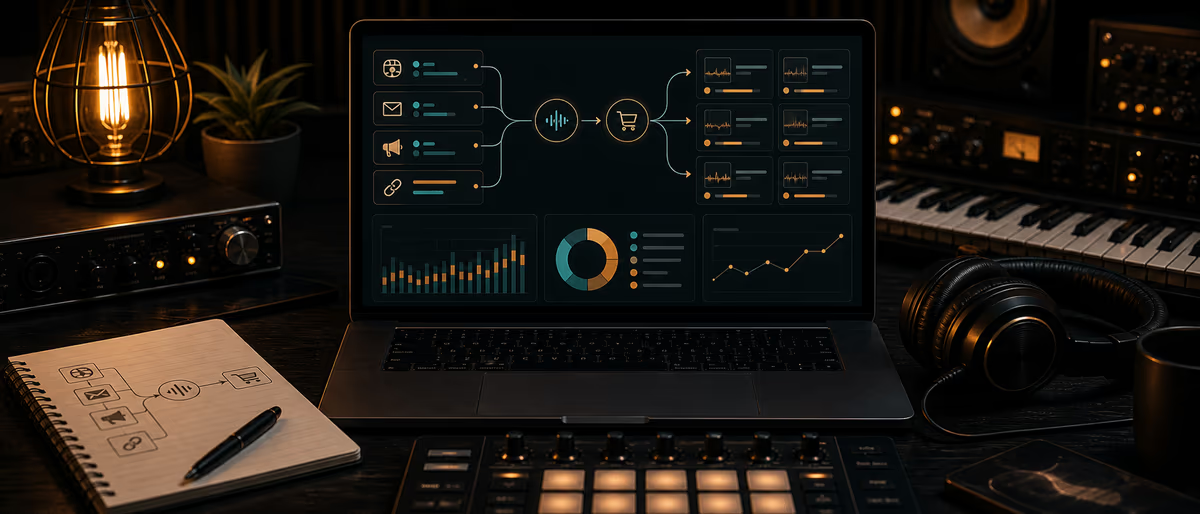
UTM tracking for beat stores
Quick Answer
UTM parameters tag links so analytics can show which channel and campaign sent store visitors. Standardize utm_source, utm_medium, and utm_campaign with a naming dictionary, log every campaign URL, and put tracked links in Instagram/TikTok bios, YouTube descriptions, emails, and ads — not bare domain roots.
Why Bare Links Waste Beat-Store Insight
If every Instagram, YouTube, Discord, and email click hits https://yourstore.com with no tags, analytics collapses into “Direct / none” or a single referrer bucket. You cannot tell whether leases came from a type-beat video, a Story sticker, or a newsletter.
UTM tags are query parameters you append. They do not change the page content. Example: https://store.example/b/neon?utm_source=youtube&utm_medium=video&utm_campaign=2026_03_typebeat_neon&utm_content=desc_link
Naming Dictionary (Use These Values)
Rules: lowercase, snake_case or hyphen-case but pick one, no spaces, no personal names in source, never put secrets in URLs. Below is a producer-oriented dictionary — paste into Notion and forbid freestyle values.
| utm_source (where) | Allowed values | Notes |
|---|---|---|
| youtube | youtube | Long-form + type beats |
| Feed, Stories, Reels — distinguish via medium/content | ||
| tiktok | tiktok | |
| twitter or x | Pick one forever | |
| Newsletter platforms | ||
| discord | discord | Server or announcement channel |
| beatstars | beatstars | Off-platform profile links back to own site |
| Ads or organic landing if tagged | ||
| meta | meta | Facebook/Instagram ads |
| collab | artist_handle as source only if needed | Prefer utm_campaign for collab name |
| utm_medium (mechanism) | Allowed values | Use for |
|---|---|---|
| video | video | YT description, TikTok bio from video CTA |
| social | social | Organic social posts |
| social_paid | social_paid | Boosted/paid social |
| Broadcast or automation | ||
| linktree | link_in_bio or linktree | Bio tools (pick one string) |
| cpc | cpc | Search ads |
| affiliate | affiliate | Partner links |
| qr | qr | Print / live show cards |
| dm | dm | Saved reply links in DMs |
| community | community | Discord/forum posts |
| utm_campaign patterns | Examples | Meaning |
|---|---|---|
| yyyy_mm_offer | 2026_07_summer_lease_sale | Time-bound promo |
| yyyy_mm_content | 2026_07_yt_how_i_make_808s | Content-led traffic |
| evergreen_lead_magnet | evergreen_free_drum_kit | Always-on magnet |
| release_sku | release_chrome_kits_v1 | Pack/beat launch |
| retarget | retarget_cart_abandon_q3 | Ads remessaging |
| Optional params | Purpose | Examples |
|---|---|---|
| utm_content | Creative A/B | thumb_a, thumb_b, cta_top, cta_endcard |
| utm_term | Paid keyword (search) | type_beat_drake, trap_drums |
| utm_id | Internal campaign ID | cmp_0142 |
Campaign Log Template
Keep a sheet named Link_Log. Every public tracked URL gets a row before you post.
| Column | Example | Required |
|---|---|---|
| link_id | L-2026-07-014 | Yes |
| date_created | 2026-07-12 | Yes |
| destination_url | https://store…/b/neon | Yes |
| full_tagged_url | https://store…/b/neon?utm_… | Yes |
| short_url | https://bit.ly/… or store short | Optional |
| utm_source | youtube | Yes |
| utm_medium | video | Yes |
| utm_campaign | 2026_07_yt_neon_typebeat | Yes |
| utm_content | desc_first_link | Optional |
| owner | you / VA | Yes |
| placement_notes | YT description line 1 | Yes |
| status | live / retired | Yes |
| sessions_7d | n/a until review | Review fill |
| leases_attributed | n/a until review | Review fill |
Builder hygiene
Use Google’s Campaign URL Builder or a spreadsheet formula: =destination&"?utm_source="&source&"&utm_medium="&… (encode properly). Prefer a link shortener that preserves query params end-to-end.
Do not reuse the same campaign name for unrelated offers six months apart without a year prefix.
Link-in-Bio Patterns
- Hub page buttons Each button gets its own UTM: source=instagram, medium=link_in_bio, campaign=evergreen_bio, content=btn_store|btn_freekit|btn_youtube.
- Deep link beats Point to the beat or pack URL, not only homepage, when the post is about that SKU.
- Story stickers Unique utm_content per creative week so you see which Story sold.
- YouTube First description link is sacred — tag it. End screens can use a second utm_content.
- Email source=email, medium=email, campaign=newsletter_yyyy_mm_dd or automation name.
- Define dictionary
Lock allowed source/medium values. - Tag top 10 destinations
Store home, free kit, top 5 beats, collab form, Discord. - Replace bio links
Update Linktree/bio tool buttons with full tagged URLs. - Wire analytics
GA4 traffic acquisition → Session source/medium/campaign; or your store’s native UTM report. - Weekly 15-minute review
Fill sessions and leases on active Link_Log rows; retire dead campaigns.
Common Mistakes
- Instagram vs IG vs insta Three sources for one app. Dictionary enforces one.
- Tagging internal nav links Do not add UTMs to every in-site click — only entry links from external placements.
- Case chaos YouTube and youtube split reports.
- Shortener stripping params Test the final redirect chain.
- No campaign log You will forget what cmp_88 meant.
- Expecting UTM to track offline cash Still need order notes for in-person sales.
Review Rhythm
Weekly: update metrics on live links and kill underperforming CTAs. Monthly: export source/medium/campaign → revenue if your store allows, and reallocate posting time toward channels with leases, not only views. Quarterly: prune the dictionary if unused values piled up.
Combine UTM discipline with analytics that matter, link-in-bio tools, and lead magnets so traffic has a job after the click.
Tag every promo link, then study more growth guides on Plugg Supply Learn.
Learning path
Related answer hubs
Frequently Asked Questions
- Do producers need UTM links?
- Yes if you promote across multiple channels and want to know which ones produce store sessions and buyers.
- Which UTM fields matter most?
- utm_source, utm_medium, and utm_campaign first. utm_content helps creative tests; utm_term helps search ads.
- Should link-in-bio tools use UTMs?
- Yes. Otherwise profile traffic is a black box. Tag each button separately.
- Can I track organic posts without ads?
- Yes. Organic Reels, YouTube descriptions, emails, and Discord announcements can all use tracked links.
- What is the most common UTM mistake?
- Inconsistent names for the same channel (Instagram/IG/insta), which fragments one source into many.
- Do UTMs affect SEO negatively?
- Used on promotional entry links they are fine. Avoid replacing all internal site links with tagged URLs.