
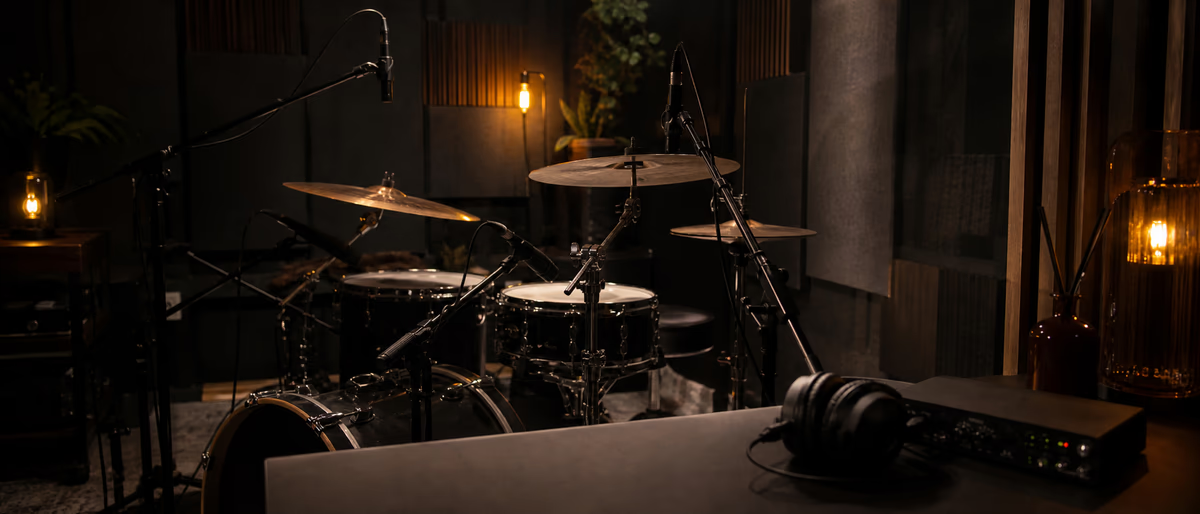
How to Record and Mix Live Drums in a Home Studio
Quick answer: Record live drums at home with a solid kick/snare/OH plan, check phase on multi-mics, control the room with absorption and close mics, then edit timing lightly and mix for mono-compatible punch. Plugg Supply verifies files before cataloguing.
Quick Answer
Record live drums at home with a solid kick/snare/OH plan, check phase on multi-mics, control the room with absorption and close mics, then edit timing lightly and mix for mono-compatible punch.
What How to Record and Mix Live Drums in a Home Studio Really Requires
How to Record and Mix Live Drums in a Home Studio fails when you chase tools before a clear outcome. Define the deliverable first: a cleaner mix, more email signups, a better live stream, or a faster session — then pick only the steps that move that metric.
Use this guide as a working checklist, not theory. Cross-check results on the same devices or channels your audience actually uses.
Step-by-Step Workflow
- 1. Set a single success metric
One number or audible target you can verify in under an hour. - 2. Prep assets and routing
Files named, buses labeled, links live, levels safe. - 3. Execute the core path
Do the minimum complete version before adding polish. - 4. QC on real conditions
Phones, mono, cheap earbuds, or live campaign stats — not only studio headphones. - 5. Document the preset
Save a template, checklist, or SOP so the next release is faster. - 6. Iterate once
Change one variable, measure again, then ship.
Key Decision Points
- Scope What is in v1 versus later polish.
- Tools Prefer reliable free/paid gear you already open cold.
- Time box Cap experiments so shipping still happens.
- Risk Rights, backups, and deliverability before public blasts.
- Handoff If others touch the project, write file and version rules.
Quick Reference
| Stage | Do | Avoid |
|---|---|---|
| Prep | Clear goal + named files | Random folder chaos |
| Build | One complete pass | Ten unfinished experiments |
| QC | Real-device / real-audience check | Solo-only decisions |
| Ship | Versioned bounce + CTA | Silent uploads with no link path |
| Learn | Note what moved the metric | Copying hype without numbers |
Common Mistakes
- Tool collecting New plugins will not replace a checklist.
- Skipping QC Studio lies; phones and stats do not.
- No CTA or next step Work without a path to fans or clients wastes reach.
- Overwriting versions Keep milestones — see project versioning habits.
Level up with verified free tools and sounds on Plugg Supply.
Learning path
Related answer hubs
Mixing and Mastering Mixing and mastering: a clear workflow from rough beat to release check. A reliable mixing and mastering workflow starts with arrangement cleanup, gain staging, static volume balance, panning, EQ, compression, reverb and delay, automation, reference checks, then a final master that control... Free VST Plugins Free VST plugins: what to download first and how to use them safely. The best free VST plugin setup for most producers is one flexible synth, one EQ, one compressor, one reverb, one delay, and one metering tool. Vital or Surge XT can cover synthesis, TDR Nova can cover EQ, DC1A or TDR ... Home Studio Setup Home studio setup: build a practical room for recording, beats, and mixing. A practical home studio starts with a quiet room, a computer, one DAW, closed-back headphones, a small plugin stack, and organized samples. Add an audio interface, microphone, pop filter, stand, and basic acoustic tre...
Frequently Asked Questions
- What is the fastest way to improve How to Record and Mix Live Drums in a Home Studio?
- Pick one metric, run the checklist workflow once end-to-end, QC on real conditions, then change a single variable.
- Do I need expensive tools for How to Record and Mix Live Drums in a Home Studio?
- Usually no. Reliable free or gear you already know beats unused premium stacks.
- How do I know it is working?
- Compare before/after on the same metric: louder clarity on phones, higher click rate, fewer revisions, or faster session start times.
- How often should I revisit this system?
- After every release or client cycle. Update the template when the same mistake repeats twice.
- What should I do if results stall?
- Shrink scope, fix QC gaps, and remove steps that do not move the metric.
- Where does this fit in a weekly schedule?
- Block one focused session for the core path and a shorter slot for QC and documentation.