
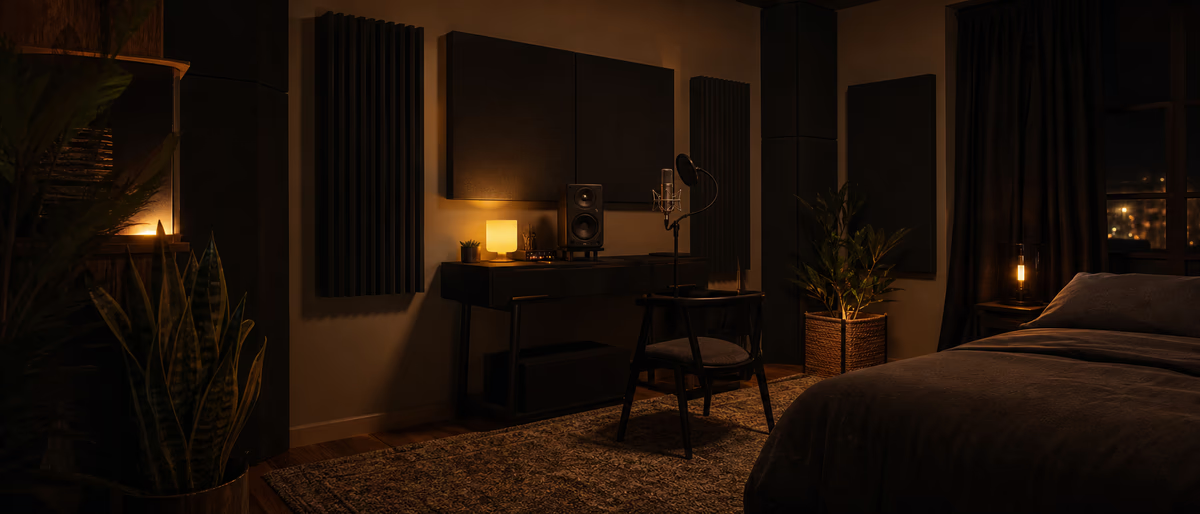
Bedroom acoustic treatment
Quick Answer
Treat a bedroom by taming first reflections at the mix position, adding broadband absorption behind the mic for vocals, and using thick traps in corners for low-end buildup—not egg cartons or full foam coverage. Start with mirror trick placement, a rug, and heavy curtains; add 2–4 panels before buying a premium mic. Plugg Supply does not sell foam but lists free metering and analysis plugins via Telegram to hear room problems in your DAW.
Why the Room Beats the Mic First
A $300 mic in a fluttery bedroom sounds worse than a $99 mic in a treated corner—the comb filtering and reverb tail are baked into the recording.
Treatment improves both recording and mixing accuracy at the listening position.
First Reflection Points
- Sit at mix position
Where you record vocals or mix most often. - Mirror on side walls
Move until you see the monitor or mic in the mirror—that point needs absorption. - Ceiling cloud optional
Panel above you reduces harsh overhead reflections. - Do not cover every wall
Dead rooms sound dull—balance absorption and diffusion if budget allows.
Corners and Low End
Small rooms exaggerate bass modes; thick fiberglass or rockwool traps floor-to-ceiling in corners reduce boomy vocals and muddy low-mids.
Thin foam squares do almost nothing for bass—prioritize mass and thickness in corners first.
Vocal Recording Setup
Face absorption behind the singer (thick duvet, panel, or closet full of clothes) to catch back wall reflections; keep laptop fan noise off during takes.
Cardioid mics reject some room sound—still treat because what leaks in is hard to remove.
DIY Panels and Budget
Rockwool or fiberglass in frames with breathable fabric beats acoustic foam kits for absorption per dollar. Build four panels before buying a reflection filter only.
Hear Problems in Software
Use spectrum and reverb analysis plugins on sweeps or claps to see peaks and decay—free tools from verified catalogs help when you lack hardware measurement mics.
Treatment Myths
Egg cartons, mattresses against one wall only, and covering 100% with thin foam. Ignoring desk reflection and monitor height.
Mixing in the Same Bedroom
Same first-reflection treatment helps mixing; add modest sub management expectations—small rooms rarely need huge sub volume for beatmaking.
Treat reflections and corners before upgrading mics—use free analysis plugins from the catalog to confirm improvements.
Learning path
Related answer hubs
Related catalog
More tutorials from the catalog
More tutorials from the Plugg Supply feed, ranked by catalog popularity.
![Truefire Integrating Percussive Techniques with Rhythm (JamPlay) [TUTORiAL]](/images/posts/truefire-integrating-percussive-techniques-with-rhythm-jampl-86170.avif?v=2026080101)
LEARNING / VIDEO TUTORIALS
Truefire Integrating Percussive Techniques with Rhythm (JamPlay) [TUTORiAL]
![Music Hackspace Abstract Composition in Ableton and by Ned Rush [TUTORiAL]](/images/posts/music-hackspace-abstract-composition-in-ableton-and-by-ned-r-86165.avif?v=2026080101)
LEARNING / VIDEO TUTORIALS
Music Hackspace Abstract Composition in Ableton and by Ned Rush [TUTORiAL]
![Truefire Modern Country Rhythm [TUTORiAL]](/images/posts/truefire-modern-country-rhythm-86151.avif?v=2026080101)
LEARNING / VIDEO TUTORIALS
Truefire Modern Country Rhythm [TUTORiAL]
![MixWithTheMasters Andrew Watt In The Stars The Rolling Stones [TUTORiAL]](/images/posts/mixwiththemasters-andrew-watt-in-the-stars-the-rolling-stone-86129.avif?v=2026080101)
LEARNING / VIDEO TUTORIALS
MixWithTheMasters Andrew Watt In The Stars The Rolling Stones [TUTORiAL]
Related articles
LEARNING / VIDEO TUTORIALS
Truefire Integrating Percussive Techniques with Rhythm (JamPlay) [TUTORiAL]
LEARNING / VIDEO TUTORIALS
Music Hackspace Abstract Composition in Ableton and by Ned Rush [TUTORiAL]
LEARNING / VIDEO TUTORIALS
Truefire Modern Country Rhythm [TUTORiAL]
LEARNING / VIDEO TUTORIALS
MixWithTheMasters Andrew Watt In The Stars The Rolling Stones [TUTORiAL]
![Music Hackspace Getting Started With Interactivity With Max by Kyle Duffield [TUTORiAL]](/images/posts/music-hackspace-getting-started-with-interactivity-with-max--86081.avif?v=2026080101)
LEARNING / VIDEO TUTORIALS
Music Hackspace Getting Started With Interactivity With Max by Kyle Duffield [TUTORiAL]
![Udemy Singing Mastery Holistic Method To Sing Freely [TUTORiAL]](/images/posts/udemy-singing-mastery-holistic-method-to-sing-freely-86017.avif?v=2026080101)
LEARNING / VIDEO TUTORIALS
Udemy Singing Mastery Holistic Method To Sing Freely [TUTORiAL]
Frequently Asked Questions
- How many panels to start?
- Four broadband panels—side walls and behind mic—plus corner traps if budget allows.
- Foam vs rockwool?
- Rockwool/fiberglass panels absorb mids and lows better; thin foam is mostly highs.
- Treat recording or mixing first?
- If one mic for vocals, treat the recording spot first; producers mixing only should treat the listening triangle.
- Closet vocal booth?
- Works as heavy absorption if deep and full of soft material—watch standing waves in tiny closets.
- Plugg Supply room plugins?
- Browse free analysis and EQ plugins to identify problem frequencies.
- Renters-friendly?
- Freestanding panels on stands and heavy curtains avoid wall damage.